
This should be a fairly short article because it’s not a very complicated subject… for a change.
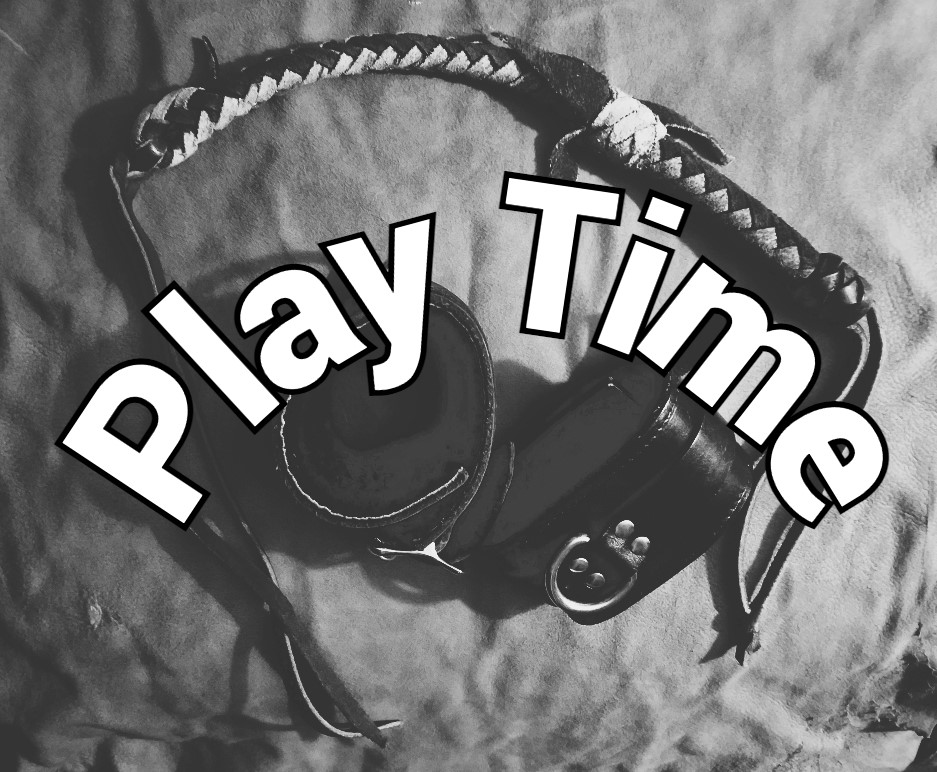
I’m sure you’ve heard the term Impact Play and you probably have a general idea of what it means. It is in the name after all. And on a surface level it’s pretty simple, but people can have a vague idea without entirely understanding the definition. Since Impact Players are probably the biggest group in the BDSM world, it’s a good one to flesh out.
Read more: What is Impact Play?The first thing you need to know about Impact Play is that it’s an umbrella term which covers a lot of activities across a broad spectrum. The term doesn’t, in any way, define how heavy a player you are. If you like to be smacked on the butt during sex for foreplay, you are indulging in some light (or maybe not so light) Impact Play.
People who enjoy being on the receiving side of Impact Play include those who like only a tiny bit of pain just to enhance, but also those who are full-blown masochists on the far end of the spread, and many don’t understand this. I think the phrase Impact Play has a scary tone for some people.
So sometimes lighter players don’t like to be told they are doing Impact Play, because they think of that as something heavier, and that’s not necessarily the case.
And, on that note, there has often been a dividing line between people who are into just spanking, and people who are into a wider range of BDSM. It’s gotten better, but you still see spankos insisting that they aren’t into BDSM because they only do spanking.
That’s because historically, spanking was done for reasons not related to fun like punishing a child or punishing a wife. So, I think it feels like you’re ‘just living an old-fashioned lifestyle’ and not indulging in BDSM. Some people will fight any designation that makes this seem like a kink.
I’ve also seen people say that it’s only Impact Play if the pain is thuddy and deep like you’d get from a paddle (as opposed to stingy and surface level like you’d get from a hand or belt), but that’s not true either.
A good old-fashioned, over-the-knee spanking is Impact Play. Even if it’s playful and barely pinkens the skin, it’s still Impact Play.
If your Dom slaps your face, it’s Impact Play.
Flogging is Impact Play.
Whipping is Impact Play.
Caning is Impact Play.
Slapping your nipples with a crop is Impact Play.
Punching (consensually, of course) is Impact Play.
You get the picture right? Basically, any time you are striking/being struck by another person consensually, for mutual gratification, you are indulging in Impact Play. This is not an inherently sexual activity and the gratification that partners get might not be sexual arousal.
Some people do Impact Play for punishment. Some people do it for stress relief. Some people do it to make their partners happy.
So… why can’t we just call it spanking/whipping/caning anymore?
Well, you absolutely can. Any time people come up with these umbrella terms, it’s just to make organization easier. It doesn’t really change anything. People like to be able to place things in categories and boxes and wide-reaching terms that cover a bunch of similar activities do that nicely.
Remember, BDSM itself is an umbrella term that gathers together a long list of different activities. I think people forget just how many different things fall under that header. People can identify as part of the scene and have vastly different ideas of what’s fun.
Some people who are active in a BDSM lifestyle don’t like or want pain at all. They might enjoy being restrained. They might enjoy kneeling and serving. They might like to be verbally humiliated, but pain of any kind is a limit for them. So it can be nice to say, “I don’t do Impact Play,” and know that it covers a whole list of things that you want to avoid.
And on the flip side, you can let people know what you are into with one easy term. After all, if you’re into one kind of Impact Play, then you are probably into other kinds too. People are rarely into just caning, just spanking, just paddling… there’s usually a lot of crossover. Mostly because with Impact Play it’s the sensation that you’re after.
So, by saying “I loveeee Impact Play,” people get a pretty good idea of a whole list of things that you enjoy.
But there are other reasons to wrap things into an umbrella term. It’s a less graphic phrase that doesn’t immediately give someone images of exactly what you like. For some people it can be uncomfortable to talk about what they enjoy, for various reasons. This is especially handy when it comes up with non-scene people.
By defining it with the broader term of Impact Play when talking with people who might not be kinky, and/or don’t need specifics, it’s less likely to make anyone, including you, uncomfortable. For instance, it sounds more mature than spanking and less scary than whipping. You won’t have to explain that yes, you like flogging, but no, it’s not like they did on navy ships.
You won’t get uncomfortable remarks about how spanking is for kids, and how can anyone like that? There won’t be a need to explain that you don’t actually enjoy spanking, but you need it to keep you healthy and emotionally centered.
Spankos are one of the largest kinky groups in the scene, but for many there is a sense of embarrassment connected to the word and the act of spanking, because for many of us, spanking was something we first got from our parents as children.
It can feel weird to be recreationally into something your parents used to do to you when they were mad, but… that’s just how it is sometimes. We can’t control what we’re into as adults.
When you’re talking to other people who are into spanking, it’s fine. They get it. They understand. But even then, there can be a little twinge of shame.
Don’t get me wrong, the embarrassment that comes from using the word can be… hot. Making a sub ask for a spanking can have them red and squirmy before you even touch them, but sometimes you’d just like to avoid it.
So, by tucking everything neatly into the Impact Play cubby, we are giving people a vague idea of what we’re into, without sharing details they don’t need to know, and if they want to know, they can ask.
It reduces the chances of being judged, when people just have a basic idea of what you’re into. It’s also a good way of determining if they are also kinky. If you say spanking, everyone knows what that is. If you say Impact Play and they aren’t phased, then they’ve clearly been around at least enough to have learned the more obscure term.
Now, you might be wondering, why would we be talking about this ‘private’ part of our life with anyone outside the scene anyway. Well, here’s the thing. For some people, it’s not realllly that private. There are people who live the lifestyle openly, at least to a certain extent.
A collar might be noticed and questioned. A bruise might need to be explained. Someone might wonder why you call your husband Daddy. And, let’s be honest, the conversation comes up a lot more since 50Shades brought BDSM into the mainstream world.
It’s on tv. It’s in movies. It’s in books. The chances of a friend, or family member mentioning something kinky is pretty high these days, just in casual conversation. Which doesn’t mean they need or want all the details of your kinky life, but they might be curious about the basics of BDSM.
So no, you don’t have to use the term and if you’re comfortable just listing the specific types of Impact Play you’re into, then that’s absolutely fine. Of course, as an author, I find having multiple terms to describe things useful, and this is one that I do think is helpful in a number of situations.
 Musings of a Chaotic Mind
I like the term, “Impact play.” Very descriptive. I’ve heard so many . like “Domestic discipline,” (I really love that one), it is a non specific term that can include almost anything one’s deviant mind can come up with. I’m new to this site, not sure how it works, but it looks fun. amanda aldaveaux@gmail.com
LikeLiked by 1 person
I agree. It’s a very good term!
LikeLike
I enjoy your writing. You have a nice style, and I agree… th
LikeLiked by 1 person
Thank you!!
LikeLike